


Safety Standards for Lithium Battery Systems Used in Industrial Lifting Machines
Safety Standards for Lithium Battery Systems Used in Industrial Lifting Machines
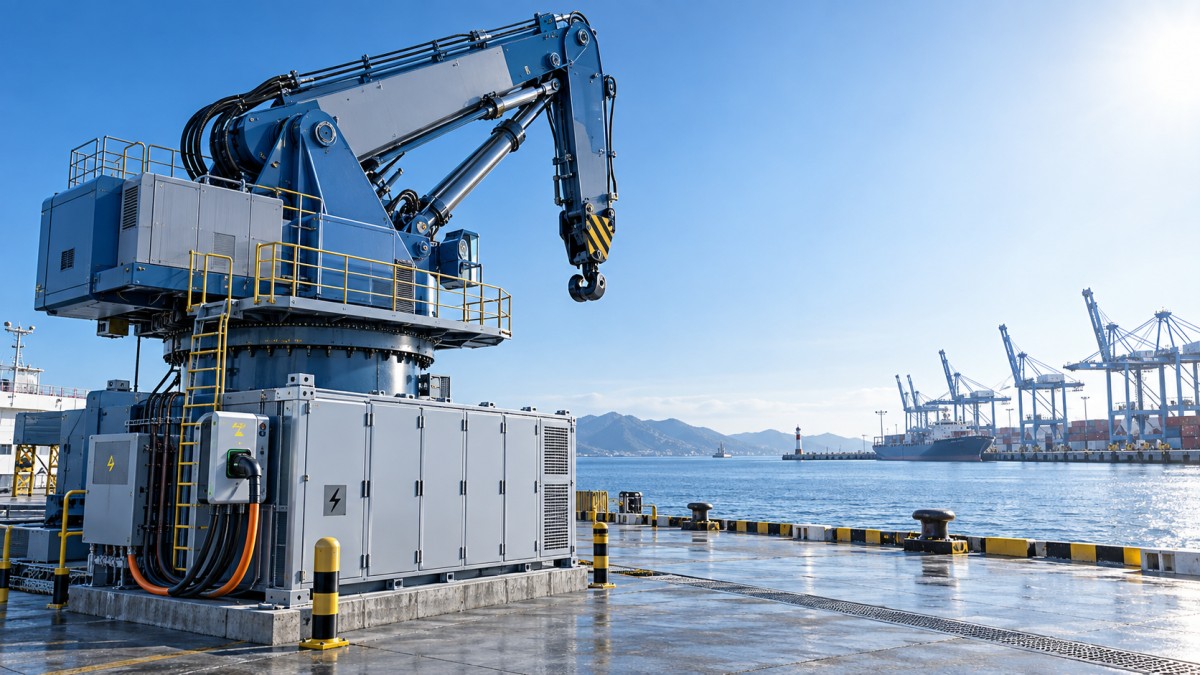
Lithium battery systems are transforming industrial lifting machines, but performance must be matched by rigorous safety control throughout equipment selection, operation, maintenance, and eventual disposal.
For quality-control and safety managers, applicable standards provide a practical framework for reducing fire, electrical, and operational risks in demanding lifting environments.
This guide examines battery selection, protection systems, charging procedures, inspection methods, and compliance priorities, including practical considerations for Lithum Motor applications used with lifting equipment.
Start With Risk Classification, Not Battery Capacity
The first safety decision is not battery size. It is determining how the lifting machine, worksite, duty cycle, and environmental conditions influence battery failure consequences.
Industrial lifting machines may operate near personnel, combustible cargo, hydraulic oil, marine salt spray, confined charging areas, or elevated platforms with limited emergency access.
Quality managers should document foreseeable hazards before approving a lithium battery configuration. This assessment should cover thermal runaway, electric shock, unintended movement, dropped loads, and charging misuse.
A battery suitable for a warehouse pallet truck may not be suitable for a marine crane, outdoor lifting platform, or machine exposed to vibration and temperature changes.
Risk classification should also identify whether the battery is installed inside the machine, removable for charging, or connected to external power conversion equipment.
Each arrangement creates different requirements for enclosure protection, cable routing, connector durability, isolation, emergency shutdown, and maintenance accessibility during normal and abnormal conditions.
Which Standards Should Quality and Safety Teams Review?
Compliance begins by identifying the standards governing the battery cells, battery pack, charger, machine electrical system, transport, and final lifting-machine application.
IEC 62619 is widely referenced for industrial lithium secondary cells and batteries. It addresses safety expectations for stationary and motive-power industrial applications.
UL 2580 is frequently considered for battery systems used in electric vehicles and industrial mobility equipment, especially where North American market access is required.
IEC 62133 may be relevant for certain rechargeable cell and battery safety evaluations, although teams must confirm that its scope matches the intended industrial application.
UN 38.3 remains important when lithium batteries are transported. It verifies that battery cells and packs have passed specified transportation safety tests.
For machinery integration, IEC 60204-1 provides key electrical-equipment principles. Functional safety requirements may also involve ISO 13849-1 or IEC 62061.
Standards should not be treated as interchangeable certificates. Safety managers must verify the exact battery configuration, chemistry, enclosure, charger, voltage, and operating use covered by documentation.
Battery Management Systems Must Control Real Failure Modes
A lithium battery pack without an effective battery management system cannot provide dependable industrial safety, even when high-quality cells are used during assembly.
The battery management system should continuously monitor individual cell voltage, pack current, temperature, insulation status where applicable, and communication faults with machine controls.
It should prevent overcharge, over-discharge, overcurrent, short circuit conditions, cell imbalance, and charging or discharging outside approved temperature limits.
For lifting machines, protective action must be coordinated with operational risk. A sudden power interruption during suspended-load handling can introduce a separate hazard.
Machine designers should define a controlled response when battery limits are reached. This may include reduced speed, alarm notification, safe stopping, or inhibited lifting functions.
Battery contactors, pre-charge circuits, fuses, and emergency isolation devices should be verified as a complete protection chain rather than inspected as separate components.
Fault records should be retrievable. Event histories help quality teams distinguish occasional operator misuse from recurring battery, charger, wiring, or environmental design failures.
Charging Controls Are Usually the Highest-Exposure Process
Many serious lithium battery incidents occur during charging because energy input, elevated temperatures, damaged connectors, and unattended operation can combine at the same time.
Charging stations should be located away from ignition sources, escape routes, combustible storage, and areas where lifting operations could damage cables or battery enclosures.
Use only chargers approved for the specific battery voltage, chemistry, communication protocol, and charge-current range. A compatible connector alone does not demonstrate safe charging compatibility.
Charging procedures should require pre-use visual inspection of cables, plugs, battery cases, ventilation openings, and connector locking features before energy transfer begins.
Operators need clear instructions for abnormal indications, including unusual heat, swelling, odor, leakage, repeated charge interruption, warning messages, or discolored electrical connections.
Safety managers should establish rules for charging supervision. The required level depends on battery capacity, room construction, suppression capability, occupancy, and incident-response arrangements.
Emergency planning should define who isolates power, who contacts emergency services, how the area is secured, and how potentially damaged batteries are quarantined afterward.
Inspection Should Be Based on Condition and Duty Cycle
Periodic inspection is more effective when it follows machine operating severity rather than a generic calendar interval that ignores vibration, corrosion, heat, and charging frequency.
Daily or shift-level checks should focus on visible damage, connector condition, alarm status, battery retention, cable protection, and any signs of overheating or fluid contamination.
Scheduled technical inspections should review insulation resistance, contactor operation, fuse condition, battery-management fault logs, enclosure seals, fastener torque, and cooling-system performance.
For marine applications, corrosion prevention requires special attention. Salt exposure can degrade terminals, enclosure coatings, cable glands, bonding connections, and low-voltage communication wiring.
Maintenance records should capture measured results, not merely completed checkboxes. Trending temperature deviations, charge duration, voltage imbalance, and recurring alarms supports earlier corrective action.
Any battery involved in impact, flooding, severe overtemperature, electrical short circuit, or fire exposure should be isolated and assessed by qualified personnel before reuse.
Integrating Lithium Power With Marine Lifting Equipment
When evaluating lithium-powered auxiliary systems for marine lifting equipment, teams must consider electrical safety alongside hydraulic stability, corrosion resistance, and load-control performance.
The MC3.0SA3 marine crane illustrates the broader integration challenge, combining hydraulic lifting functions, remote or manual control, and operation from minus 20 degrees Celsius to plus 45 degrees Celsius.
Its rated lifting capacity reaches 3T, while its maximum working radius is 8.5m. These operating conditions require predictable control behavior under changing loads and environmental exposure.
Where lithium systems supply related electrical functions, the battery enclosure and cables should be protected from hydraulic leaks, mechanical impact, saltwater ingress, and high-temperature zones.
Emergency controls must remain available regardless of battery state. Operators should be able to stop hazardous movement and place the machine in a defined safe condition.
Remote-control systems require special verification because a communication failure, low battery condition, or electrical fault must not result in uncontrolled crane motion.
Build a Supplier Approval File That Supports Audits
Supplier approval should extend beyond receiving a test certificate. Quality teams need traceable evidence that the delivered battery matches the evaluated and approved configuration.
The approval file should include cell manufacturer information, battery pack drawings, electrical schematics, battery-management specifications, charger compatibility records, and applicable test reports.
It should also identify serial-number traceability, production controls, incoming inspection requirements, software revision management, warranty boundaries, and procedures for field failure investigation.
Ask suppliers how they validate vibration resistance, ingress protection, thermal performance, electrical isolation, abuse tolerance, and battery-management response under realistic machine operating conditions.
For Lithum Motor-related projects, verify terminology and product scope carefully. Procurement descriptions should clearly distinguish traction motors, battery packs, power electronics, chargers, and complete machine systems.
Clear documentation prevents a common compliance failure: assuming that approved components automatically create an approved lifting-machine electrical system after installation.
Conclusion: Treat Battery Safety as a Machine-System Responsibility
Lithium battery safety in industrial lifting machines depends on more than selecting certified cells. It requires compatible components, engineered protection, disciplined charging, meaningful inspection, and documented accountability.
Quality-control and safety managers should prioritize risk assessment, battery-management validation, charging-area controls, environmental suitability, and supplier traceability before approving any battery-powered lifting application.
The strongest compliance outcome is a system where battery behavior, machine controls, emergency procedures, and maintenance practices work together under normal operation and foreseeable failure conditions.
Send Us A Message
Get a Quote
Regardless of whether you require general advice or specific support, we are happy to help you.